
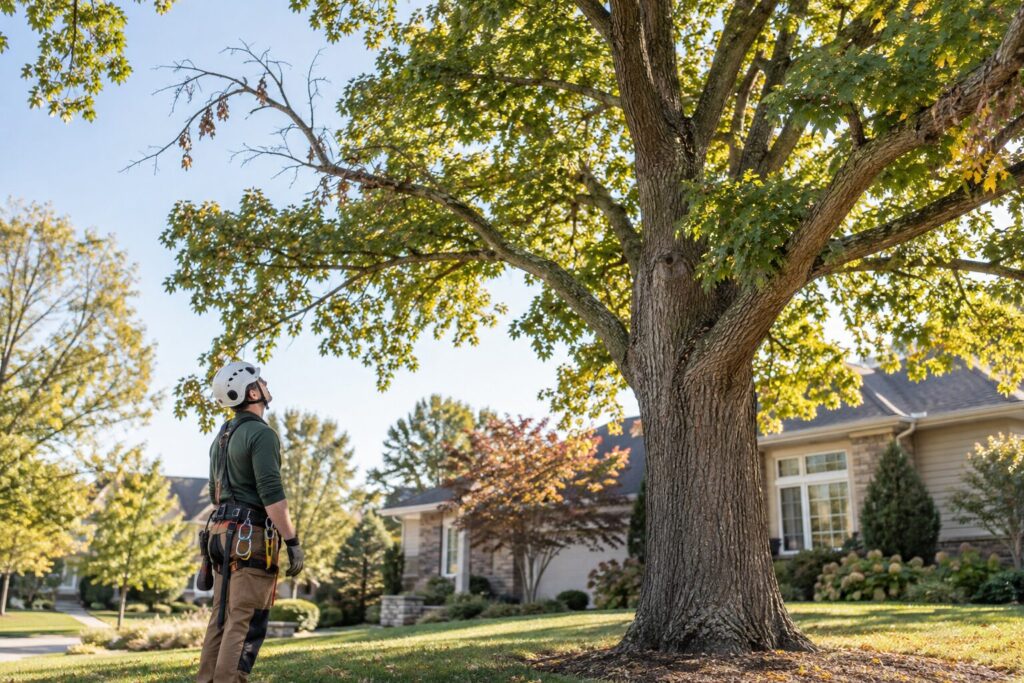
Trees are one of the most valuable features on a property. They provide shade, improve curb appeal, offer habitat for wildlife, and can contribute to property value. But like any part of your landscape, trees require proper care to remain healthy and safe.
When a tree starts showing signs of damage, disease, or overgrowth, many homeowners wonder: Is it better to invest in tree trimming, or is it time to remove the tree altogether?
The answer depends on the tree’s health, structure, location, and long-term potential. In many cases, professional tree trimming in Omaha, NE can extend a tree’s life and prevent more expensive problems. In other situations, tree removal may be the safest and most practical investment.
Tree Trimming: An Investment in Long-Term Tree Health
Tree trimming and pruning are primarily maintenance services designed to keep healthy trees growing properly. Removing dead, damaged, or poorly positioned branches can improve the tree’s structure while reducing potential hazards.
According to the Nebraska Forest Service, pruning is one of the most important tree maintenance practices, but improper pruning can actually damage a tree.
Professional tree trimming may be appropriate when:
- Dead, broken, or diseased branches need to be removed
- Branches are rubbing against one another
- Limbs are growing toward your home, roof, driveway, or other structures
- Branches are interfering with sidewalks or other areas of the property
- A young tree needs structural training
- The tree has become overgrown or poorly shaped
- Storm damage has left broken or weakened limbs
Regular pruning can also help prevent structural problems from developing as a tree matures. Well Rooted Gardens offers tree growth training and annual inspections to help identify and correct problems before they become major issues.
Why Tree Trimming Can Be the Better Investment
If a tree is fundamentally healthy, removing it may be unnecessary. Strategic pruning can preserve the tree while addressing safety, appearance, and structural concerns.
That makes trimming an investment in the tree’s future, rather than simply addressing an immediate problem.
A well-maintained tree can continue providing shade, beauty, and environmental benefits for many years. The Nebraska Forest Service notes that healthy trees can provide benefits such as shade, wind protection, improved air quality, reduced stormwater runoff, and increased property value.
When Tree Removal Makes More Financial Sense
While preserving trees is often the goal, there are situations where removal is the better investment.
A tree that is severely damaged, structurally unstable, dead, or declining may eventually become a significant liability. Continuing to spend money maintaining a tree that cannot realistically recover may not make sense.
Signs that a tree may need to be removed include:
- Major cracks or splits in the trunk
- Significant decay
- Extensive dead branches
- Severe trunk damage
- Major root problems
- A substantial loss of the living canopy
- A tree leaning in a dangerous direction
- Serious disease or insect infestation
- A tree that poses an ongoing threat to your home or other structures
The Nebraska Forest Service specifically notes that major cracks or splits in a trunk or major limbs can make a tree unsafe, and that removal may be recommended when a significant portion of the living crown has been destroyed.
Well Rooted Gardens also identifies dead or dying trees, disease and infestation, hazardous locations, structural instability, and landscape renovation as common reasons tree removal may be necessary.
Tree Trimming vs. Tree Removal: Which Should You Choose?
The easiest way to think about the decision is to consider the tree’s long-term potential.
| Consideration | Tree Trimming | Tree Removal |
| Tree is generally healthy | ✓ | |
| Dead or damaged branches | ✓ | |
| Poor branch structure | ✓ | |
| Young tree needs training | ✓ | |
| Tree has significant decay | ✓ | |
| Tree is dead or dying | ✓ | |
| Major trunk cracks or splits | ✓ | |
| Serious structural instability | ✓ | |
| Tree threatens structures | Sometimes | Often |
| Tree is interfering with landscape plans | Sometimes | ✓ |
However, there is no substitute for an on-site evaluation. Two trees may look similar from the ground but have very different structural or health issues.
Don’t Wait Until a Tree Becomes an Emergency
One of the biggest advantages of proactive tree care is the ability to address problems before they become emergencies.
A broken branch after a Nebraska storm can damage a roof, vehicle, fence, or other landscaping. A tree with developing structural problems may become increasingly dangerous as it grows.
Regular inspections and appropriate pruning can identify potential issues early. Well Rooted Gardens notes that many structural problems can develop when trees are young and eventually contribute to splitting or failure years later.
If a tree has already suffered storm damage, professional evaluation is especially important. Large-tree pruning and removal can involve significant safety hazards, and the Nebraska Forest Service recommends consulting a professional arborist when dealing with larger trees.
The Cost of Removing a Tree Isn’t Just the Removal
When comparing trimming and removal, it is tempting to focus only on the immediate price of the service. However, the bigger question is what the tree is likely to cost you- or save you-in the future.
A healthy tree that only needs periodic pruning may be relatively inexpensive to maintain compared with the cost of removing it and replacing the shade, screening, or visual appeal it provides.
On the other hand, continuing to maintain a tree that is structurally compromised could simply postpone a much larger expense. If the tree eventually falls, the resulting property damage and emergency cleanup could far exceed the cost of proactive removal.
This is why professional evaluation is so important. The goal isn’t necessarily to trim every tree or remove every problem tree. The goal is to determine which option provides the best long-term outcome for your property.
What About Diseased or Pest-Damaged Trees?
Disease and insect infestations can make the decision more complicated.
Some trees can be treated and preserved, while others may be too severely damaged to save. For example, the Nebraska Forest Service notes that ash trees affected by Emerald Ash Borer may still be treatable when the damage is not severe, while trees with extensive canopy loss or serious health problems may require removal.
That’s why it is important not to assume that a tree with signs of disease automatically needs to be removed. An experienced arborist can evaluate the tree and determine whether treatment, trimming, monitoring, or removal is the most appropriate option.
Well Rooted Gardens provides tree health services, including Emerald Ash Borer treatments, insect and disease treatments, and tree nutrient feeding.
Protect Your Investment With Professional Tree Care
So, is tree trimming or tree removal the better investment?
For a healthy tree with manageable structural or maintenance issues, tree trimming is often the better long-term investment. Proper pruning can improve structure, reduce hazards, and help a tree remain healthy for years to come.
For a tree that is dead, severely damaged, diseased beyond recovery, or structurally unstable, tree removal may be the better investment. Removing a hazardous tree can protect your home, property, and family while giving you the opportunity to replant or redesign the area.
The key is making the decision based on the tree’s health and future—not simply its appearance today.
Need Help Deciding Whether to Trim or Remove a Tree?
If you’re unsure what to do with a tree on your property, a professional evaluation can help you make an informed decision. Well Rooted Gardens has certified arborists on staff and provides professional tree trimming, tree removal, tree health, and growth-training services throughout Omaha, Elkhorn, Bennington, Blair, and Fort Calhoun, NE.
Rather than automatically removing a problem tree, the goal is to determine whether it can be safely preserved—or whether removal is the best option for your landscape.
Contact Well Rooted Gardens to schedule a professional tree evaluation and find the right solution for your property.