
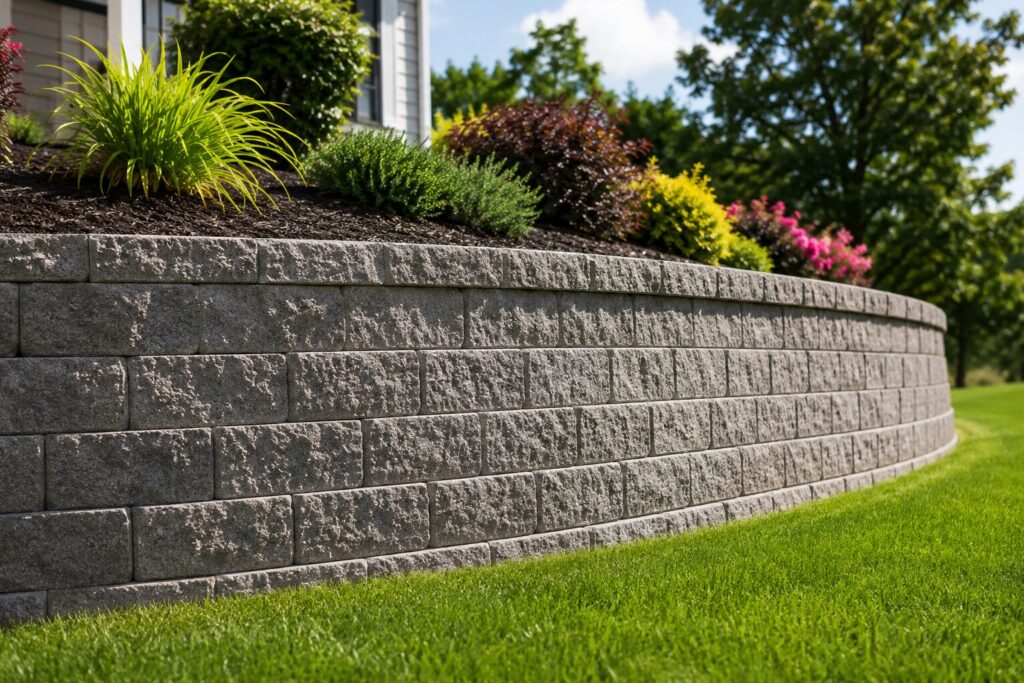
Retaining walls are one of the hardest-working features in any landscape. They hold back soil, prevent erosion, improve drainage, and create functional outdoor living spaces on sloped properties. But like any structural element, retaining walls can deteriorate over time if they’re poorly built, aging, or exposed to excessive moisture.
The good news? Retaining walls rarely fail without warning.
Recognizing the early signs of retaining wall failure can help you avoid costly repairs, protect your property, and prevent a complete collapse. At Well Rooted Gardens, we specialize in designing and building retaining walls that are both beautiful and structurally sound, helping homeowners throughout Omaha and the surrounding communities enjoy landscapes built to last. Well Rooted Gardens provides professional hardscape services, including retaining walls, drainage solutions, and erosion control for residential landscapes.
Why Retaining Walls Fail
A retaining wall does much more than hold back dirt. It must withstand constant pressure from the soil behind it, while also managing water drainage and seasonal freeze-thaw cycles.
When a wall is improperly designed, lacks adequate drainage, or begins to deteriorate with age, that pressure can eventually cause the structure to fail.
Common causes of retaining wall failure include:
- Poor drainage behind the wall
- Improper base preparation
- Inadequate reinforcement
- Soil erosion
- Tree root pressure
- Heavy rainfall
- Freeze-thaw cycles
- Age and natural wear
The earlier these issues are identified, the easier—and often less expensive—they are to correct.
1. The Wall Is Leaning or Tilting
A retaining wall should remain straight and level for years.
If you notice the wall beginning to lean forward, even slightly, it’s one of the clearest signs that excessive pressure is building behind it.
This often happens when:
- Water cannot drain properly
- Soil becomes oversaturated
- The wall lacks sufficient reinforcement
- The foundation begins to shift
A leaning wall should never be ignored, as the movement typically worsens over time.
2. Large Cracks Are Appearing
Small surface imperfections may occur as materials settle, but wide or expanding cracks often indicate structural movement.
Pay close attention if you notice:
- Horizontal cracks
- Stair-step cracks
- Large vertical cracks
- Cracks that continue growing
These openings allow additional moisture into the structure, accelerating deterioration and weakening the wall’s integrity.
3. Bulging Sections
If part of your retaining wall appears to bow outward, the pressure behind the wall is likely exceeding what it was designed to handle.
Bulging often develops because of:
- Poor drainage
- Hydrostatic pressure
- Saturated soil
- Inadequate construction
This is one of the final warning signs before a partial or complete wall failure.
4. Water Isn’t Draining Properly
Water management is one of the most important components of a successful retaining wall.
Professional retaining walls are designed with drainage systems that allow water to escape rather than build up behind the wall.
Warning signs include:
- Water pooling behind the wall
- Water seeping through joints
- Mud collecting at the base
- Persistent soggy soil
Without proper drainage, water creates tremendous pressure that can push even a well-built wall out of place.
5. Blocks or Stones Are Shifting
Individual blocks or stones should remain securely in place.
If sections begin separating, moving, or becoming uneven, the underlying structure may be compromised.
Movement can indicate:
- Soil settlement
- Foundation problems
- Frost heave
- Erosion beneath the wall
Ignoring these changes often leads to larger structural issues.
6. Soil Is Washing Out
One of a retaining wall’s primary jobs is preventing soil erosion.
If you notice soil washing through cracks, disappearing behind the wall, or collecting at the bottom after heavy rain, the wall may no longer be functioning properly.
Erosion not only weakens the wall itself but can also threaten nearby landscaping, patios, walkways, and foundations.
7. The Wall Is More Than 20 Years Old
Age alone doesn’t guarantee failure, but older retaining walls deserve periodic inspections—especially if they weren’t built using modern engineering and drainage practices.
Materials naturally deteriorate over time, and changing soil conditions can gradually place additional stress on the structure.
If your retaining wall is decades old and showing any of the warning signs above, it’s wise to have it professionally evaluated.
Why DIY Repairs Often Make the Problem Worse
Many homeowners attempt to straighten a leaning wall or replace a few loose blocks themselves.
Unfortunately, visible damage is usually only part of the problem.
Successful retaining wall repairs often require addressing:
- Drainage improvements
- Base stabilization
- Soil conditions
- Reinforcement systems
- Proper backfill materials
Simply replacing surface materials without correcting the underlying cause can result in the same failure happening again.
The Importance of Professional Design and Installation
Retaining walls are more than decorative landscape features—they’re structural elements that require careful planning and construction.
At Well Rooted Gardens, our team designs retaining walls with long-term performance in mind. Every project takes into account factors such as soil conditions, drainage, grading, and the intended use of the space to create a solution that is both functional and visually appealing. The company serves Omaha, Elkhorn, Bennington, Blair, and Fort Calhoun with hardscape installations, consulting, and landscape expertise.
Whether you’re installing a brand-new retaining wall or replacing one that has begun to fail, professional construction helps ensure your investment stands up to Nebraska’s changing weather and seasonal conditions.
Don’t Wait Until Your Wall Collapses
Retaining wall problems rarely resolve themselves. In fact, delaying repairs often leads to more extensive damage, higher repair costs, and increased safety risks.
If you’ve noticed leaning, cracking, bulging, drainage issues, or shifting blocks, now is the time to act.
A professional inspection can identify the root cause of the problem and determine whether your wall can be repaired or should be rebuilt before a complete failure occurs.
Protect Your Landscape with Well Rooted Gardens
A properly built retaining wall protects your property, enhances curb appeal, and creates usable outdoor spaces for years to come.
If your retaining wall is showing signs of failure—or you’re planning a new hardscape project—the experienced team at Well Rooted Gardens is here to help. We’ll evaluate your existing wall, recommend the best solution, and build a retaining wall designed for strength, beauty, and long-term performance.
Contact Well Rooted Gardens today to schedule a consultation and discover how expert retaining wall construction can protect your landscape and your investment.